
I recently listened to an excellent audiobook of Jane Austen's 1811 novel Sense and Sensibility, and there was one line that was wickedly funny, and one moment that made me yell out loud at the car speaker.
But, in director Georgia Oakley's new film adaptation of the work, currently in theaters, that line is absent, and the moment is ... underwhelming.
Transforming novels into movies is a tricky business, especially when dealing with works by the deeply revered and meticulously studied Jane Austen.
But, while fidelity to the source material is very important in an adaptation, the final result still has to be an entertaining film ... and this one is.
How Does Sense and Sensibility Fall Among Recent Austen Movies?
As Austen movies go, this isn't the superb 1995 version of Sense and Sensibility — directed by Ang Lee, and starring (and written by) Emma Thompson — nor is the pure delight of director Autumn de Wilde's quirky and elegant 2020 version of Emma.
Thankfully, however, it is nowhere near the execrable 2022 Netflix version of Austen's Persuasion.
Also, despite its visual resemblance to director Joe Wright's messy, muddy, unkempt 2005 version of Austen's Pride and Prejudice, Sense and Sensibility manages to retain a more recognizable portion of Austen's plot, themes, and characters.
But, like Wright -- who came after the BBC's incomparable 1995 TV-miniseries version of Pride and Prejudice -- Oakley stood in the shadow of the big-screen Austen of that same year. So, she's said in interviews that not repeating what that film did affected her choices.
From Variety:
There’s like a critical scene that we set at a party instead of a picnic because we were like, “Well, people have already seen the picnic. How can we do it differently?”
Other than Emma, which I found much harder to read than to watch (heavens, they make long speeches in that book), Austen's novels fare much better as miniseries than as movies. Along with being often quite funny and slyly satrical, they're complex and realistic character studies that take time to unfold.
Austen's tales have a universality while also being set in a very specific cultural context, and that's hard to fully capture in two-ish hours.
If a miniseries is an epic poem, movies are haikus.
The only question is, how egregious are the changes, and does the final result do justice to the themes of the book?
What Is Sense and Sensibility About?
Set in the 1790s (a bit earlier than Austen's regular Regency setting), it's the story of the two older Dashwood sisters: reserved Elinor (Daisy Edgar-Jones) and romantic Marianne (Esmé Creed-Miles) -- there's a third, high-spirited youngest sister, Margaret (Bodhi Rae Breathnach) -- the daughters of their father's second wife (Caitriona Balfe).
When the father dies, his estate passes to his son, John (Tom Brooke), from his first marriage, whose wife (Stacy Martin) maneuvers him into providing barely any financial support to his stepmother and half-sisters. Facing ejection from their manor home, the Dashwood women receive assistance from an unexpected quarter.
Garroulous, matchmaking widow Mrs. Jennings (Fiona Shaw), a distant cousin by marriage or something, offers the women a cottage on the property owned by her country-squire son-in-law (Turlough Convery), located in the Devon countryside.
Along the way, the women meet potential suitors: John Dashwood's brother-in-law, the reserved, honorable Edward Ferrars (George MacKay), whose demeanor matches Elinor's; and the dashing, love-bombing Willoughby (Frank Dillane), whose passionate nature entices Marianne.
And then there's the even more reserved, borderline grim (but wealthy), Colonel Brandon (Herbert Nordrum) — with his black coat, hat, beard, and horse — who has eyes only for Marianne, despite an age gap of more than 20 years.
Romance, secrets, and intrigue follow.
What Is the Theme of the Story?
As Austen watched the more contained era of Enlightenment Neoclassicism transition into the emotionally unbridled Romantic Era, she created Elinor and Marianne to represent the positives and negatives of each.
Elinor keeps her feelings inside and acts with propriety, while Marianne always follows her heart and believes in a singular, eternal love. Circumstances in the story painfully challenge both of these philosophies.
This is more evident in the 1995 version of Sense and Sensibility, but it's still there in the 2026 one — if with a different focus. Seeking to not repeat Thompson's approach, Oakley and her first-time screenwriter, novelist Diana Reid, have emphasized the loving bond of the sisters, rather than focusing mainly on their differences.
Also, Daisy Edgar-Jones is nearly a decade younger than Thompson was when she played Elinor, so the overall feel is more youthful and energetic.
Is It Historically Accurate?
According to most commentators, yes and no, with the costumes, and especially the hair, getting mixed reviews. Also, Oakley opted to leave drawing rooms and manicured gardens behind in favor of fields and forests.
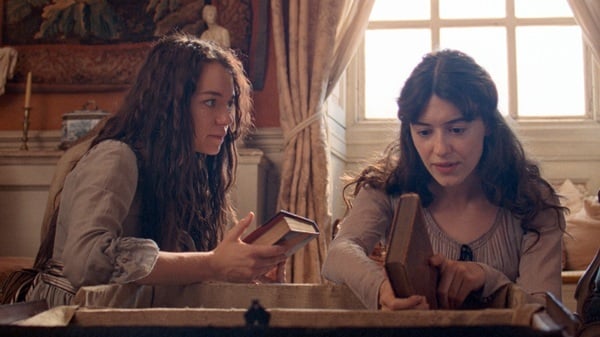
In this version, the Dashwoods aren't quite elegant ladies living in genteel poverty (they're not that poor, actually, in the book, just not wealthy). The sisters, especially Marianne, dash about the English countryside, sometimes barefoot, getting mud on their skirts, their hair flowing free.
In particular, Marianne's hair looks like it's only observed brushes from a distance.
Their clothes have a homespun appearance and are in muted colors, a style more suitable to social ranks below the Dashwoods' place at the lower rung of gentility.
These aren't choices driven by the story itself but in service of creating the idea of women attuned to nature and straining against the strictures of society.
This is a common theme in modern storytelling, and while it can be obnoxious, It's held enough in check here to not interfere with the enjoyment of the story.
Is Sense and Sensibility Worth Watching?
Definitely. The film is rated PG, and while getting boys to go to it might be a challenge (but one worth taking on), it would certainly appeal to girls from middle school and up.
It's brisk and charming, and from the laughs and gasps, the audience I was with enjoyed it immensely. And, as FTP's documentary The Dating Project, currently streaming free on EWTN+, starkly shows, dating and mating are as fraught today as they were then — sometimes, surprisingly, for the same reasons.
There are many conversations to be had about the relative virtues of restraint and passion, and the costs of each, and what real love looks like.
ONE NOTE FOR PARENTS: The biologically female non-binary actor Eliot Sumner, whose father is the musician Sting, gives an utterly unconvincing performance in a small role as the male Mr. Palmer.
The Oscars don't require non-binary or trans actors to qualify for awards, so I'm not sure why this was done. But, it is a bit distracting and doesn't add to the film in any meaningful way.
Following the movie should be a foray into the novel, since (as I discovered, as a late convert to Austen) her books are eminently readable, even for a modern audience.
Oh, and that wonderful line?
“Elinor agreed to it all, for she did not think he deserved the compliment of rational opposition.”
Image: Focus Features
Kate O’Hare, a longtime entertainment journalist, is Social Media Content Manager and Blog Editor at Family Theater Productions.
More Like This:
Netflix's 'Narnia: The Magician's Nephew': Christian Writers Weigh In
Ancient Adaptations: Film Drama From the Past Doesn’t Get Old
Netflix's 'Little House on the Prairie': The Ingalls Clan Begins Anew
Keep up with Family Theater Productions our website, X, Instagram and YouTube.