
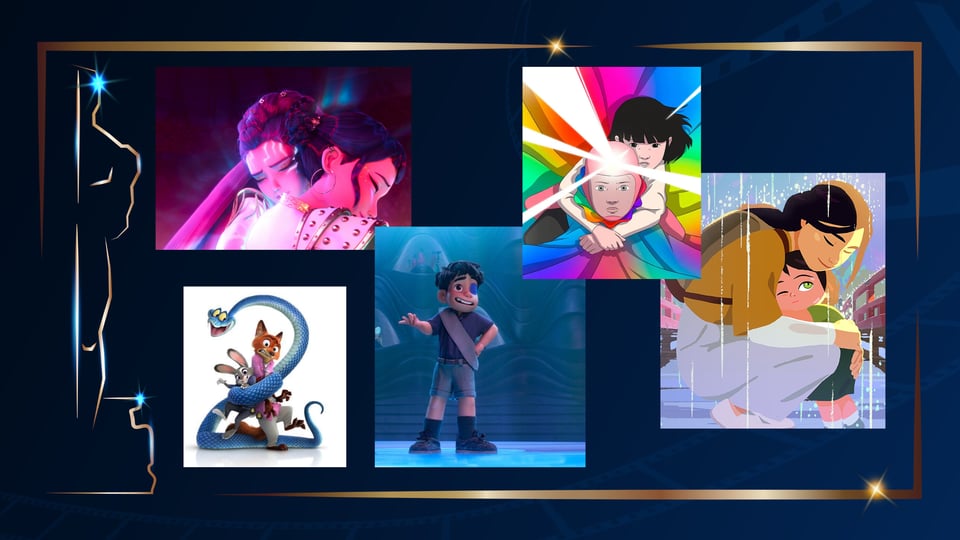
From the Editor: As of this writing, voting for the 98th Academy Awards is still underway for a couple more days, ahead of the March 15 ceremony. While Sinners and One Battle After Another appear to be front runners for the Best Picture award, the race for Best Animated Feature looks to be a lock for KPop Demon Hunters.
Or, is it?
Actually, it just may be.
The Sony Animation production (yup, it's steeped in Korean culture, but it was produced in the U.S.) became a runaway hit on Netflix, and won the Golden Globe and the Critics' Choice Award for best animated feature.
It also carried off 10 wins, including best feature, from the Annie Awards, handed out by the Los Angeles branch of the International Animated Film Association.
But, Arco, one of its competitors for the Oscar, did take home an Annie for best independent feature, and other Oscar nominees have also been contenders for top awards. And, sometimes, the Oscars will surprise you.
But, are these films worth your time -- and suitable for your family?
To answer that, we've asked our the newest member of our writing crew, author, speaker (and Catholic mom) Kelsey Gillespy, to gather the brood and have a look.
Arco
Arco is the story of a rainbow-clad, 10-year-old time traveler who visits a time when AI and robots are the main source of companionship and workers.
In this particular setting, the robots have more brains and heart than most human characters. The people are portrayed as unintelligent, clumsy, calloused, and negligent.
However, Arco crashes (almost literally) into a girl who wishes for her world to be different.
Through their friendship -- and tons of unnecessary peril to keep the plot moving -- the film aims to show that sometimes God puts relationships into our lives to help shape us into the person the world needs most.
Elio
Elio is a tale of a quirky, socially outcast orphan who is searching for a place -- or more importantly, a people -- where he belongs.
After losing his parents and enduring the wrath of school bullies, Earth no longer feels like home. And, like so many of us in our quest for Home, Elio looks up. Instead of looking for God, however, Elio wants to be abducted by aliens.
This heartwarming movie examines our deep, human desire to be seen, known, and loved, and echoes man’s eternal search for a celestial home full of beauty and belonging.
It also addresses the ache of loneliness that we can all feel at times, especially when others don’t understand the gifts and passions God has given us.
“Unique can sometimes feel like alone,” one character says to Elio. “But you are not alone.”
This movie, sprinkled with genuinely laugh-out-loud moments, illuminates the power of friendship, family, fatherhood, the goodness of life on earth, and shows that sometimes the “search for life” can lead you right back to your own front door.
KPop Demon Hunters
Originally, I was hesitant to watch this film simply because of the title. (Like, really? They’re making animated films about demons now??) Turns out, you shouldn’t judge a book by its cover or a movie by its title.
Whether the creators intended to or not, KPop Demon Hunters is jam-packed with theological richness to the likes that I have never seen in any other non-Biblical animated film.
In an extremely honest way, it examines the brokenness (and beauty) of humanity, the importance of bringing shame to the light, the ways that Satan tries to trick and trap us, the healing power of forgiveness, and how God’s love can set us free from the chains that bind us.
It also addresses the need to be intentional with the media we consume, powerfully pointing out that some media is life-giving and brings us closer to God, while other media damages our souls.
It was fascinating to witness this particular piece of media move the needle of my own judgement so drastically. There I was before the movie, thinking this Demon Hunters thingy must be trash, and then by the end (after pausing the movie several times to talk with my kids about its powerful messages on faith and media), heralding it as a cinematic gem.
Not to mention, it includes first-of-its-kind (and arguably the most complex and original) music in an animated feature to date.
Because it does address themes of spiritual warfare and darkness, I would recommend it for kids who are a little older (7+), but definitely show it to those kids and use it as a means to initiate deep discussions (and maybe a few dance parties, too).
Little Amélie or the Character of Rain
From the very first line, this movie is strangely theological in its narrative, though not necessarily in line with Catholic teaching.
There’s a lot of talk about God, but from the very get-go, it’s clear that something is off. Eventually, one deducts that its "theology" is askew, because it’s coming from a three-year-old’s very limited understanding ... but that can be very confusing, especially for child viewers.
I was hoping this would be a story about how unconditional love brings out the best in people, and I suppose to some extent, it was.
Two characters in particular demonstrate the power of bringing people to life (both literally and metaphorically) through unconditional love. Then, unexpectedly, the movie transformed into an ode to Japanese culture.
In the end, the movie points out that we all have the choice to give or refuse love to those around us. Through this story, we also get to experience the ups and downs of life through the eyes of a small child.
While I appreciate the unique perspective, three-year-old Amélie admits that “when you are three, you see everything and understand nothing,”and then, through that muddled viewpoint, tries to tackle heavy topics like death, grief, cultural divisions, and even attempted suicide (by the toddler herself).
Zootopia 2
Similar to the original installment, Zootopia 2 focuses on breaking free from stereotypes and working together with those who are different.
It highlights the need to have open and respectful dialogue with those who think differently than we do, making this movie timely in today’s world.
Also, like the first movie, this sequel tends to flip the script on “undesirable” characters/animals (this time with snakes), making snakes out to be victims who “would never hurt anybody."
Like so many modern movies, it pushes the narrative that everyone is perfect just as they are. By doing so, it encourages viewers to acknowledge only the good things in people and dismiss anything else, which, in reality, gives us a distorted view of the world and the people in it.
Though it wallops viewers over the head with the positive message that we should see and appreciate everyone’s differences, it fails to show that we are broken people who need others’ differences to fill the gap for our own limitations (and vice versa) so that, together -- through the beautiful gift of community -- we become a stronger.
The 98th Oscars, with host Conan O'Brien, broadcasts live on ABC and streams on Hulu on Sunday, March 15, 2026.
Image: Background: Adobe Stock. Inserts: (L-R, top row); KPop Demon Hunters (© Netflix); Arco (© Neon); (L-R, bottom row): Zootopia 2 (© Walt Disney Pictures), Elio (© Pixar), Little Amélie or the Character of Rain (© GKIDS)
Kelsey Gillespy is a blogger, author, speaker, and homeschooling mom of several.
Faith & Family News: 'David' on Prime; Colin Farrell & Emma; Disney's 'Versa'
Hallow’s Lent40 Challenge: Russian Lit, Roumie, Pratt and Repentance
'Digital Age Family Safety': YouTube Series Puts Faith in Your Feed
Keep up with Family Theater Productions our website, Facebook, X, Instagram and YouTube.